If you’ve ever picked up a bar of handmade soap at a market or small shop, you may have wondered what actually makes it “handmade.” Is it simply soap made in smaller batches, or is there more to it?
Handmade soap is made by combining oils or fats with an alkali, typically sodium hydroxide (lye), through a process called saponification. With traditional handmade soap, the soapmaker chooses the ingredients, develops the recipe, mixes and pours each batch, cuts the individual bars, and gives them time to cure.
So, while a finished bar of soap may look pretty simple, there’s actually quite a bit of chemistry, formulation, and hands-on work behind it.
How Is Handmade Soap Made?
There are several ways to make handmade soap. One of the most common traditional methods is cold-process soapmaking.
With cold process, the soapmaker starts with a recipe and chooses the oils, butters, liquids, scents, colors, and other ingredients that will go into the batch.
Recipes can vary quite a bit, but the basic process starts with three things: oils or fats, a liquid, and lye.
Choosing the Oils and Butters
There isn’t one standard recipe for handmade soap, and that’s one of the things that makes soapmaking so interesting.
Soapmakers have a long list of oils and butters to choose from, including olive oil, coconut oil, avocado oil, sunflower oil, castor oil, sweet almond oil, rice bran oil, shea butter, cocoa butter, and mango butter, just to name a few.
And they don’t all do the same thing.
Different oils and butters contribute different qualities to the finished bar. Some can help create a harder bar, while others influence the lather or how the soap feels when you use it. Butters can also affect hardness and the overall characteristics of the soap.
The percentages matter, too. A soap made with olive oil and coconut oil, for example, can turn out very differently depending on how much of each oil is used.
When I formulate a soap recipe, I’m not just choosing oils and butters because I like the ingredients. I’m looking at what each one contributes to the finished bar and how they work together. Even a small change in the percentages can change the hardness, lather, and overall feel of the soap.
Yes, Handmade Soap Is Made With Lye
Let’s talk about an ingredient that sometimes makes people a little nervous: lye.
Traditional soap cannot be made without it.
For bar soap, sodium hydroxide, commonly called lye, is combined with a liquid and then mixed with oils and fats. This starts a chemical reaction called saponification.
During saponification, the lye reacts with the fats and oils and transforms them into soap. When a recipe is properly formulated and the process is complete, active lye is not left behind in the finished bar.
Something else happens during this process, too. Saponification naturally produces glycerin. It doesn’t have to be added separately to cold-process soap. It’s created during the soapmaking process and remains in the finished bar.
So yes, lye is used to make handmade soap. But that doesn’t mean you’re washing with a bar of lye.
Making Each Batch Its Own
Water is often used as the liquid in soapmaking, but it certainly isn’t the only option.
Soap can also be made with liquids such as goat milk, coconut milk, aloe vera, carrot juice, coffee, tea, beer, and even wine. The liquid becomes another part of the formulation and can affect both the soapmaking process and the characteristics of the finished bar.
Then there are all the other ingredients a soapmaker can work with.
Depending on the recipe, handmade soap may include essential oils, fragrance oils, clays, botanicals, herbs, natural colorants, exfoliants, salts, seeds, and other specialty ingredients.
This is one of my favorite parts of making soap. I’ve made soaps using everything from goat milk to carrot juice, and each recipe has to be approached a little differently. There’s a lot of room to experiment with ingredients and create bars with completely different scents, textures, colors, and appearances.
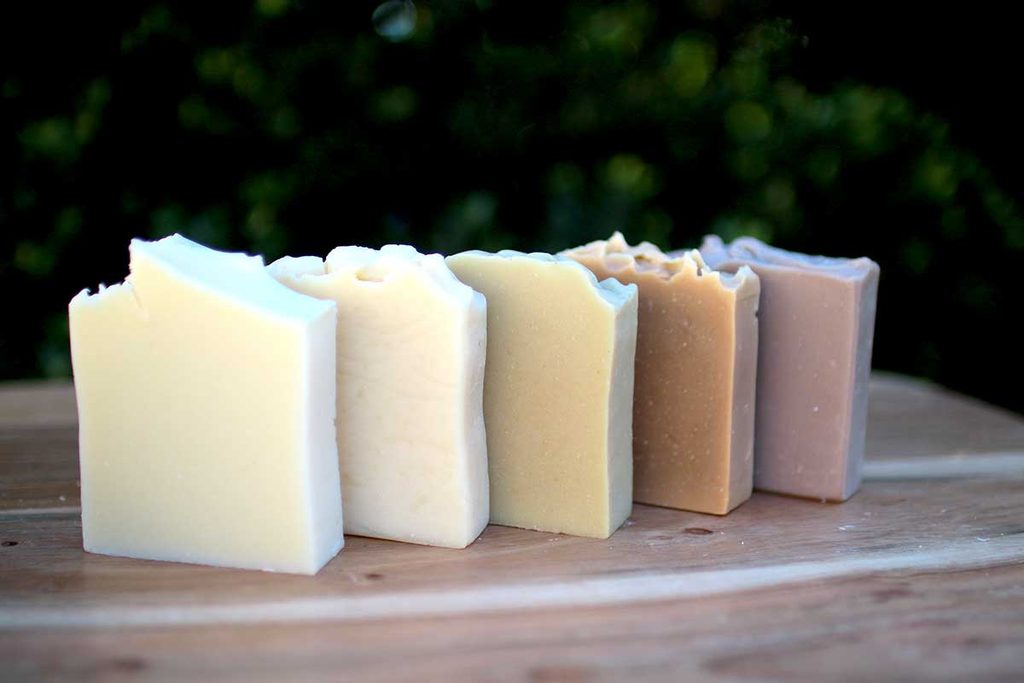
It’s also one reason handmade bars aren’t always perfectly identical. Small variations in color, pattern, shape, or appearance are completely normal when something is being made by hand.
Why Does Handmade Soap Need to Cure?
Cold-process soap isn’t finished the moment it comes out of the mold. It needs time to cure, usually for several weeks, before it’s ready to use.
During the first day or two after a batch is made, the saponification process continues as the lye reacts with the oils and fats to create soap. Once that reaction is complete in a properly formulated batch, active lye should not remain in the bar.
But that doesn’t mean the soap is ready to use just yet.
Over the next several weeks, excess water gradually evaporates and the soap continues to develop. The bars become harder, milder, and longer lasting, with the lather and overall feel of the soap improving as it cures.
That’s why cold-process soapmakers don’t typically sell freshly made bars. Giving each batch its full cure time is an important part of producing a finished bar that’s ready to use.
It’s one part of soapmaking that simply can’t be rushed. A batch made today won’t be ready to use tomorrow.
Handmade Soap vs. Commercial Soap: What’s the Difference?
There are differences between handmade and commercial soap, but it isn’t as simple as saying one is “good” and the other is “bad.”
Handmade cold-process soap is generally made in smaller batches, giving the soapmaker control over the recipe and the ingredients that go into it. Traditional soap also contains the glycerin naturally created during saponification.
Some mass-produced cleansing bars are made differently and may use synthetic detergents rather than traditional soap. There are quite a few differences between the two, so we’ll save the deeper comparison for another post.
Is Handmade Soap Better for Your Skin?
Handmade soap isn’t automatically better for everyone simply because it’s handmade. What goes into the recipe matters, and so does your individual skin.
One of the benefits of making soap from scratch is control over the formulation. The soapmaker decides which oils, butters, liquids, scents, colorants, and other ingredients go into the recipe and how much of each to use.
Personal preference plays a role, too. One person may love a scented bar with plenty of exfoliation, while someone else may prefer something simple and fragrance-free.
So rather than looking at the word “handmade” alone, take a look at what’s actually in the bar.
How Can You Tell If Soap Is Really Handmade?
If you want to know whether a soap is truly handmade, start with the ingredient list and don’t be afraid to ask the person who made it.
A traditional handmade soap ingredient list will usually reflect the oils and fats used to make the soap, along with other ingredients such as fragrance, essential oils, clays, botanicals, or exfoliants.
You may also see ingredients listed as “saponified oils.” That’s simply another way of referring to oils that have gone through the soapmaking reaction with lye.
It’s also worth remembering that words such as “artisan”, “natural”, and “handcrafted” don’t necessarily tell you how a soap was made.
Personally, I’m always happy to talk about what goes into my soap and how I make it. If you’re buying handmade soap and you’re curious about an ingredient or how a particular bar was made, ask. Most soapmakers are pretty knowledgeable about their recipes because they’re the ones actually formulating and making them.
Why Choose Handmade Soap?
There are plenty of reasons people choose handmade soap, from the variety of ingredients and scents to simply enjoying something that was actually made by a person rather than coming off a large production line.
A handmade bar starts with a recipe. From there comes measuring and mixing the ingredients, choosing the scent, creating the colors or design, pouring the batch, cutting the bars, and then waiting while they cure.
Small-batch soapmaking also leaves plenty of room for variety. One batch might feature a simple essential-oil blend, while another could include goat milk, clay, botanicals, exfoliants, or a completely different combination of oils and butters.
And because it’s made by hand, each bar may be just a little different from the next.
Choosing handmade soap is also a simple way to support a small business and the person behind it. In many cases, the same person developing the recipe is also making, cutting, packaging, and selling the finished bars.
Handmade From Start to Finish
There’s more behind a bar of handmade soap than you might think.
It starts with understanding the chemistry, but there’s plenty of creativity involved, too. The soapmaker chooses the oils and butters, develops the recipe, selects the liquid, decides on scents, colors, and other additions, and then measures, mixes, pours, cuts, and waits while the bars cure.
By the time a handmade bar reaches your soap dish, quite a bit has happened to get it there.
And maybe that’s the simplest answer to “What is handmade soap?” Its soap made from scratch, thoughtfully formulated, and made by hand from beginning to end.
Frequently Asked Questions About Handmade Soap
Does handmade soap contain lye?
Lye is used to make traditional handmade soap, but active lye should not remain in a properly formulated finished bar. During saponification, sodium hydroxide reacts with oils and fats to create soap.
Why does handmade soap need to cure?
Cold-process soap needs to cure so excess water can evaporate and the bar can become harder and longer lasting. The curing process generally takes several weeks.
How long does handmade soap last?
How quickly you go through a bar depends on its formulation, size, how often you use it, and how you store it. Letting handmade soap dry thoroughly between uses can help the bar last longer.
How should I store handmade soap?
Keep the bar somewhere it can drain and dry between uses rather than allowing it to sit in standing water. A well-draining soap dish can make a big difference.
For bars you aren’t using yet, choose a cool, dry place with some airflow.
Why don’t handmade soap bars always look exactly the same?
Because they’re made by hand. Colors and patterns can vary a little from batch to batch, and individual bars may not be perfectly identical. Those small differences are simply part of making, pouring, cutting, and finishing soap by hand.